Jann Freed, PhD, is a dynamic author, coach, keynote speaker, and professor. After 30+ years in higher education and community service, she has developed a unique leadership philosophy regardless of your role – CEO, employee, parent, or juggling multiple roles.
Foreword by Chip Conley, Co-Founder of the Modern Elder Academy (MEA)
Breadcrumb Legacy™: How Great Leaders Live a Life Worth Remembering
Intention. Purpose. Design.
“When do we leave our legacy?”
Dr. Jann’s latest book, published by Routledge, is a blueprint for leaders at all levels and for people of all ages who want to lead and live in ways they want to be remembered.
Kelly McMasters is an essayist, professor, mother, and former bookshop owner. She is the author of the Zibby Book Club pick The Leaving Season: A Memoir-in-Essays (WW Norton) and co-editor of the ABA national bestseller Wanting: Women Writing About Desire (Catapult). She is currently an Associate Professor of English and Director of Publishing Studies at Hofstra University in NY.
“Jann Freed is a passionate lifelong learner who generously shares her expertise to help local businesses grow and thrive. Her work reflects deep research, invaluable insights, and monumental contributions to organizations seeking to empower and support their employees. I highly recommend engaging with Jann – not only for your personal enrichment but also to foster the development of your team.”
Nataliya Boychenko Stone, PhD, CEBS
Sr. Vice President ‑ Team Lead, EB/Shareholder
“Jann Freed’s book, Breadcrumb Legacy, profoundly resonated with me, especially her analogy of retirement as Tarzan swinging through the jungle. It inspired me to reflect deeply on my values and the legacy I want to leave, transforming my view of retirement from an end to a new beginning.”
Julie Ann Larson – VP, Chief Technology & Innovation Officer, Wellabe Team
“Dr. Jann Freed has a gift for breaking down complex conversation in an approachable and meaningful way. She provides practical examples that inspire you to reflect on who you are and how you can shape your legacy through daily action, values and accomplishments. Her message of giving back to the community makes us all better together.”
Kristi Knous, President, Community Foundation of Greater Des Moines
“Jann approaches the topics of legacy and purpose with curiosity, possibility and joy – and all rooted in her deep knowledge and wisdom in the subjects of leadership, business and career transitions. She is a ‘must-book’ speaker and coach on these important topics to make the rest of our lives the best of our lives!”
Sophia S. Ahmad, Vice President of Philanthropy, WesleyLife
“Jann’s human focused approach allows people of all stages and ages to engage with the concept of legacy. Jann is a talented facilitator that calls her audience to action with hands-on tools to be intentional about the legacy they want to leave.”
Jill Shedek
HR Director, Bank Iowa
“Jann Freed has worked with Mittera’s leadership development programs for several years, specifically Jann facilitated several sessions working with new leaders on developing assertive communication skills. Additionally, Jann has worked with our senior leaders on creating and crafting their legacy.”
Maggie Kelsey
Mittera, Human Resources Manager
“I’ve always admired Jann’s ability to make thinking people think. About themselves. About others.”
William D. Scherle
Iowa State Bar Foundation Fellows, President
“Jann is a thoughtful and engaging speaker – weaving personal experiences into presentations that keep her audiences listening attentively and leaving inspired. Jann’s positivity is infectious. Her sessions are filled with laughter and laced with her high energy personality.”
Laura Sweet
Vice President and Chief Operating Officer, Des Moines Performing Arts
“Jann’s presentation style is engaging and energetic. Jann’s passion for research and data make the insights she shares feel relevant to a wide range of audiences. I found her discussion around loneliness and making friends as you age to be incredibly moving.”
Hannah Krause
Owner/Operator, EDEN
“Jann has been thinking strategically about the transition from work to other life experiences, and it shows! She is thoughtful, funny, and engaging. When I hear her talk, I always come away with new ideas that had not occurred to me before.”
J. Ann Selzer, PhD
Selzer & Company
“Jann’s presentation style is warm and inviting. She intentionally includes her audience throughout the journey of her presentation, ensuring memorable stories and laughs along the way. Her content is helpful and tangible. I walked away from Jann’s presentation with concrete ideas and a sincere appreciation for Jann’s approach and perspective.”
Tiffany Tauscheck
President & CEO, Greater Des Moines Partnership
“Jann is both knowledgeable and relatable. Her authenticity and energy is so engaging and helps make her message so meaningful and genuine.”
Sally Dix
Executive Director of Bravo Greater Des Moines
“Jann’s workshop was a hit with our attendees. Her sense of humor and personal anecdotes created an engaging, casual learning environment. Jann wove together thought-provoking content, discussion, and worksheets to help people consider their own life experiences, goals, and to have take-aways for further exploration. I am confident attendees left with the tools they needed to live their legacies.”
Amy Jennings, Executive Director LeadDSM
“Jann Freed is an exceptionally talented and gifted person. Her energy and message informed and reenergized our affiliate colleagues – all left feeling good!”
Daniel Garrett, Executive Director American Association for Respiratory Care
“Jann is an enthusiastic and engaging presenter who is passionate about the work she does. She has so many interesting stories about people she has met and worked with over the years. As a young professional, I was motivated to reflect on my path and how I engage with others. I learned a number of helpful tips and tools I have been integrating into my life. I look forward to attending another workshop with her.”
Erin Griffin
Donor Services Coordinator, Iowa National Heritage Foundation
“A couple of months ago I had the pleasure of attending a luncheon at which Jann was the keynote speaker. I have known Jann for almost 30 years now and have proudly observed her career from a distance following my graduation from Central College (where Jann taught for a season) in the mid 1990’s. Jann’s message that day challenged those in attendance to consider if the rest of your life is the best of your life, and I found her message to be uplifting, entertaining (funny), and frankly rather inspiring.”
Brad Rempe
Senior Advisor, Foster Group
“Wow! I’ve heard leadership presenters before, but Jann is the first one who made me think and actually plan to put into motion her ideas and message. I highly recommend her to motivate your current and future leaders. Jann’s upbeat and charismatic style kept everyone engaged.”
Jim Engle
Iowa Downtown Resource Center, Iowa Economic Development Authority
“My husband I and I were discussing what we wanted to accomplish over the next several years. Dr. Freed led us through the Strategic Futuring process. I am pleased to say we accomplished many of the goals we set out to do. I would highly recommend working with her.”
Mollie Phukan
Recovery and Resiliency Program Officer - Small Business Growth Philanthropy at Wells Fargo
“I highly recommend Jann to facilitate dialogue or make a keynote presentation. She instantly established a rapport and engaged the audience very effectively.”
Ryan Crane
Director of Philanthropy, Des Moines Playhouse
“As out keynote speaker, Dr. Freed talked about “Conversations about Death and Other Elephants in the Room” for our annual Mid-Iowa Planned Giving Council Fall Conference. She is exceptionally knowledgeable, motivational, and she successfully challenged us to think differently about end-of-life conversations with donors.”
Doyle Monsma
Director of Planned Giving and Major Gifts, Orchard Place
“Jann is an enthusiastic presenter who brings positive energy to every room she enters. I have especially appreciated panel discussions she’s facilitated with a women’s group where she thoughtfully engaged both the panelists and event participants.”
Lynne Yontz
Chief Charitable Giving Officer Greater Des Moines Foundation
“Dr. Jann Freed has a rich background and experiences grounding the insights and analyses she offers. She truly listens and provides actionable suggestions. She will get you unstuck and see the numerous opportunities in every situation. She is the Executive Coach one needs to become their best.”
Gül E. Kremer, Ph.D.
Dean | School of Engineering, The University of Dayton
“Jann spoke at the Iowa Downtown Conference to an audience of community organizers from across the state. She is a dynamic speaker who leads by example and demonstrates her knowledge through her lived experiences.”
Michael Wagler
Iowa Economic Development Authority
“Jann facilitated a session on “Building a Community of Inspired Teams” with a large number of our Operations Leadership. She did a great job engaging the audience by drawing from their experience. She was a breath of fresh air – leaving us energized to go out and motivate our teams to higher levels of engagement and productivity.”
Brad Stoefen
Training & Development Manager, HNI Workplace Furnishings
“Jann spoke with deep knowledge of her research and practices in a concise and thoughtful flow. An energetic speaker with strong ownership of her valued wisdom and advice…not to be missed.”
Priscilla Dickinson Sayeed
Financial Advisor, Morgan Stanley
“I highly recommend Jann Freed’s book, Leading with Wisdom: Sage Advice from 100 Experts. This book clearly identifies eight practices of great leaders, provides clear examples of the practices in action, and includes activities to implement the practices into daily life. This work is truly inspirational.”
Dr. Julia A. Teahen
Baker College Online
“Jann was easy to communicate with, flexible, and professional. Jann delivered a keynote speech as well as a working session on developing your leadership legacy. The participants of the forum found Jann to be thorough, engaging and an expert at the topic of developing a leadership legacy.”
Mickey Hauber Pliakos
John Deere Global SAP Services
“Jann was more than a great guide, she was amazing. Her own openness made the process meaningful and productive. I found myself with the tools to create a better work environment for myself and co-workers, as well as the resources to continue growing long after the process.”
Joy Talmon
United Way
“Jann’s executive development coaching has been one of the most valuable experiences in my career. She helped me to recognize the importance of making connections and networking in the community to broaden my horizons and identify opportunities to develop myself.”
Shannon Bieliski
Wells Fargo
“I highly recommend Jann Freed’s book, Leading with Wisdom: Sage Advice from 100 Experts. This book clearly identifies eight practices of great leaders, provides clear examples of the practices in action, and includes activities to implement the practices into daily life. This work is truly inspirational.”
Craig A. Wassenaar
Wassenaar Financial Group
“Dr. Jann Freed has spoken to our emerging leaders several times, and on each occasion, she brings wisdom, insight, new perspective, and enthusiasm to the concept of leadership. Her approach is informative and engaging, and attendees always leave the classes feeling inspired and confident to take on new opportunities.”
Penny Sullivan
General Manager Mittera Iowa
“Jann’s integrity and expertise quickly engaged the audience; she connected in a very conversational style while challenging us to think deeply about our individual and collective legacies. Jann’s humorous yet profound stories established her as a lifelong learner, teacher, seeker and mentor.”
Kate Milligan
FBL Financial Group, Inc.
“Jann is friendly, approachable, extremely knowledgeable, and best of all quite likeable. I would, without hesitation, and with enthusiasm attend one of her presentations. She continues to inspire.”
Kevin A. King
Market President, Ohnward Bank & Trust
“Jann is an excellent speaker and opened the floor to related questions, providing in-depth answers to all. Many attendees complimented Jann on her presentation and knowledge on the subject matter.”
Kim DeFily
CBRE
“Dr. Freed delivered the perfect keynote address for our group… Inspiring, Encouraging and Insightful!”
Kim Colby
President, Seniors on the Move
“Dr. Freed offers powerful ways for people to discover and connect with what is most important in their lives. She gave us great examples of how to use this new way of thinking at work and in our own personal lives. I’ve adopted several of her suggestions and feel better about how I can impact our community in ways I hadn’t considered.”
Denny Linderbaum
President & COO, UnityPoint Health – Des Moines Foundation
“Jann Freed is a dynamic speaker and teacher who effectively educates and inspires her audiences and clients– from college kids to C-level executives in corporate and not-for-profit organizations – to think strategically and make purposeful change.”
Bob Burkhart
BSN, RN, Retired Airforce
“Jann Freed is a dynamic speaker and teacher who effectively educates and inspires her audiences and clients– from college kids to C-level executives in corporate and not-for-profit organizations – to think strategically and make purposeful change. Jann’s impressive academic background coupled with her “real-world” strategy experience make her a valuable leader, consultant and speaker.”
Suzanna de Bacca
President and Publisher Business Publications, Inc.
“Jann’s high energy and enthusiasm are outshined only by the depth of her research and command of the topic. She has a passion for learning, so she brings you the most up-to-date and insightful information that you can put immediately into action.”
Leisha DeSmet
CEO, YMCA Des Moines
“Jann presented a highly informative, well received workshop for our Metro Women Connect group entitled Disrupting HR: Thinking Beyond the Money! Jann is an insightful and engaging presenter who enthusiastically shares her knowledge with any group.”
Bobbi Segura
Women Lead Change, Regional Manager
“Dr. Freed’s presentation to our Legacy Group at SIOR’s recent Fall World Conference was dynamic, thought-provoking, and inspiring. She provided us with helpful questions to consider, and possible roadmaps to follow, as we begin the next chapter in our personal and professional lives.”
Virginia Antevil
Director of Administration, Society of Industrial and Office REALTORS (SIOR), Washington, DC
“As a new Leader, Jann’s workshops were very timely for me. She included helpful suggestions and ways to think about leadership that I had not considered. I enjoyed the discussions with other leaders to gain insight on how to deal with constant change in the workplace environment.”
Beth Wahlstrom
Customer Service Supervisor, American Enterprise
“Every organization experiences change in order to grow and be successful. This series of workshops is a great opportunity for leaders at all levels to better understand and develop the skills necessary to effectively understand and deal with this change.”
John Scheffler
Underwriting Supervisor, American Enterprise
“Jann gave the most inspiring message about becoming a sage, mentoring, and keeping relevance to senior careers at the Legacy Members meeting at SIOR (Society of Office and Industrial Realtors).”
Kevin Crowley
COO/Manager, SIOR
“We introduced an early retirement program and wanted to fully prepare our team members to make an informed decision in preparation for retirement. Jann’s Beyond The Money course helped our team members think about their retirement from the lens of finding a purpose and leaving a legacy. “
Jim Plagge
CEO Bank Iowa
“Dr. Freed did an excellent job presenting at our AARP volunteer recognition ceremony on ‘Why Purpose is Powerful.’ Her presentation was insightful, and she wove in personal anecdotes making it entertaining as well. I would recommend Dr. Feed to anyone looking to inspire a group and help them identify their purpose at any stage in life.”
Brad Anderson
AARP Iowa State Director
“The session was very well attended with positive feedback from all participants. The employees appreciated the investment the company made in their journey after retirement. We will definitely hold more sessions!”
Marsha Aldridge
Vice President, IMT Insurance
“The most compelling message that Dr. Jann delivers is to think about what you want your legacy to be – not at your job but after your job. Over 70% of those team members who attended one of Dr. Jann’s sessions wanted more information, so we’ve scheduled some more in depth sessions later this year.”
Joyce E. McDanel
VP of Human Resources and Education, Unity Point
“Jann understands what it takes to engage and motivate her audience. Her preparation was evident for our event as over 600 people attended not only to listen to what she had to say, but to leave with insights to integrate into their daily lives.”
Jim Hayes
Executive Director, Mind and Spirit Counseling Center
“Jann Freed is an unusually talented woman – she has strengths is so many areas. Her long teaching career enables her to be a captivating speaker who keeps the attention of her audiences. Her greatest strength may be her deep thoughts on learning, leading, and sage-ing on which she has authored books.”
Connie Wimer
Founder and Chairman of Business Publications Incorporated
“I was fortunate to attend one of Dr. Freed’s pre-retirement workshops. Her material resonated with many of us looking for advice on meaning and purpose after retiring. It was an engaging session in which she opened our minds to the opportunities available after one’s main career. “
Sang-ki Han
Attorney at Law
“As a 40-year veteran of the insurance industry, I believe Dr. Freed’s knowledge, passion, and empathy would be highly effective tools to motivate “Baby Boomer” insurance company employees to move forward into the next phase of their lives.”
Sandy Patrick, President
Patrick and Associates, Inc.
Subscribe
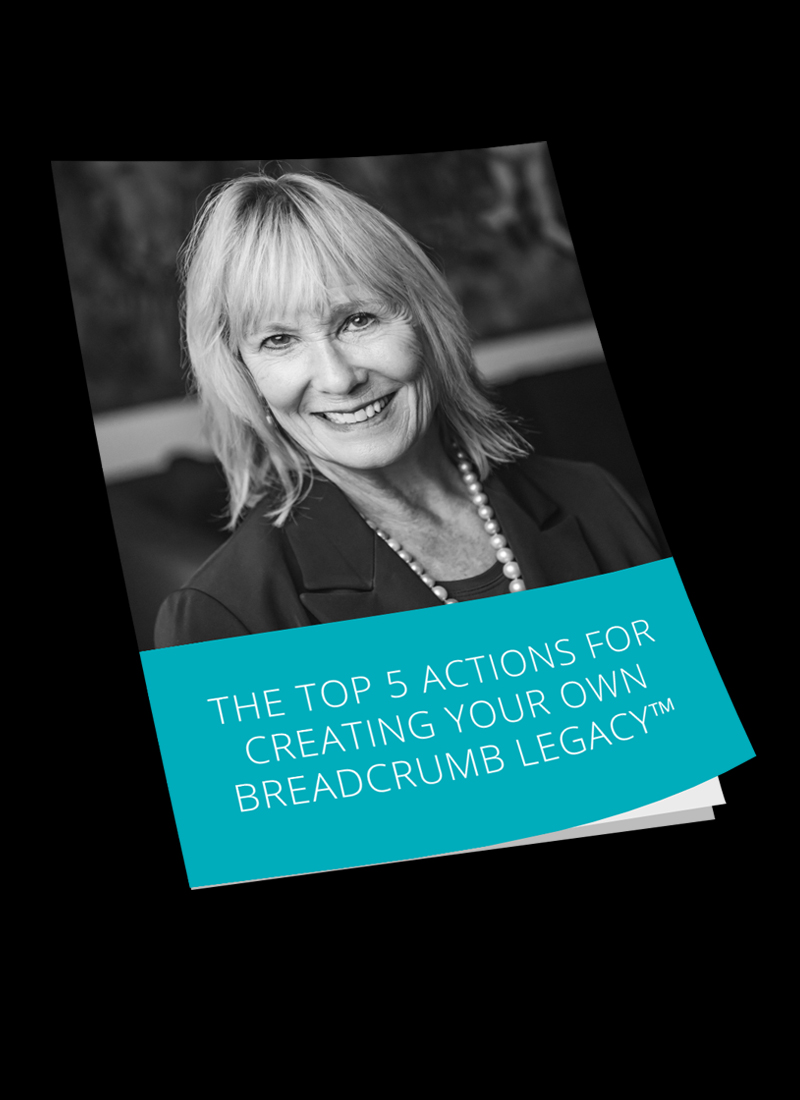
Sign Up and Download Your FREE Copy ofThe Top 5 Actions For Creating Your Own Breadcrumb Legacy™
We use cookies to ensure that we give you the best experience on our website. If you continue to use this site we will assume that you are happy with it.Ok